
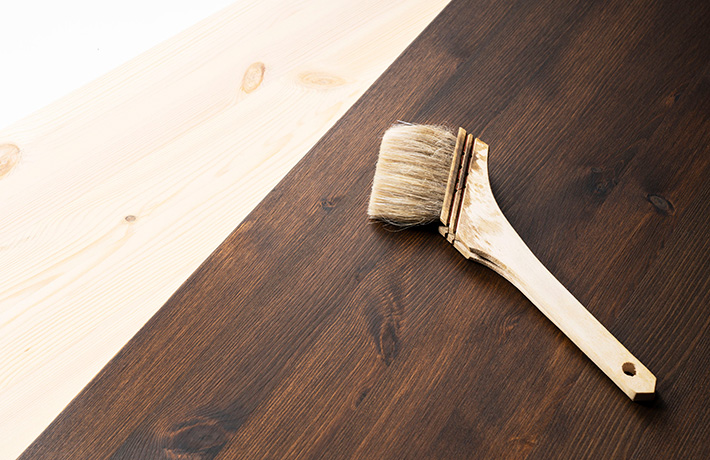
Hardwood floors date back to the 1600s. The French made them popular by creating unique, hand-crafted designs known as parquetry for royal families and other affluent groups. Eventually, wood floors became more accessible to ordinary people in the 1700s and 1800s; however, the quality was substandard.
Other types of flooring became popular in the early 1900s until the 1980s, such as linoleum and carpet. However, in recent years, hardwood has been steadily increasing in popularity. This may be because the quality of the wood has improved, and the cost, though still expensive, is much more affordable to more people. Also, because of the much more ethical harvesting of wood, using wood floors in homes are less controversial.
Are you considering having hardwood floors installed in your home?
Here are a few tips on choosing the best wood floors and choosing the best stain for hardwood floors.
Types of Hardwood Floors
If you have grown tired of your carpeted floors or are tired of the dust and dander that it spreads throughout your house, hardwood is a great alternative. Which type of wood should you use in your floor remodeling project? There are many options to choose from but below are the most common types of hardwood floors. The Janka score that follows each wood type tells you how hard each kind of wood is, with the highest being the hardest. The harder the floor, the more durable it is.
- Ash – 1320
- Pine – 870
- Yellow Birch – 1260
- Walnut – 1010
- Hickory – 1820
- Maple – 1450
- White Oak – 1360
Aside from natural hardwood, you can also choose engineered hardwood floors. Engineered hardwood is made of a very thin top layer of hardwood bonded to a piece of plywood. It is exceptionally durable, typically lasting up to 30 years.
Engineered hardwood looks a lot like natural hardwood, but you may have more options in terms of size. For instance, natural hardwood comes in long, slender planks, while engineered hardwood can be purchased as wider planks.
Whether engineered or natural, when choosing your floors, keep in mind that neither of these types of wood works well in humid conditions. If you reside in a humid climate, hardwood may not be the best option for your floors because of the potential for cupping, crowning, or buckling.
Best Hardwood Floors for Staining
There are many hardwood floor options for you to choose from, but keep in mind that not all wood floors take a stain well if you intend to stain them. For instance, pine, birch, and maple may have a blotchy appearance if stained. On the other hand, oak, walnut, ash, and hickory are better woods for staining. Some engineered hardwood floors can be stained, also. However, they can’t be stained as many times as natural wood.
What Stain Color to Use for Hardwood Floors
Now that you have narrowed your decision down to what wood floor you want to use based on whether it can handle staining, it’s time to choose a stain. A hardwood floor finish may enhance your floors by toning the color up or down. The stain will also provide protection for your floors against general wear. Staining may also provide a sheen that can be glossy, semi-glossy, satin, or matte. Here are the most common floor stains to use, along with the pros and cons of each:
• Water-Based
Pros: clear, durable, and dries quickly
Cons: durable but not as durable as other finishes, so scratches show easily
• Oil-Based
Pros: durable and suitable for high traffic
Cons: drying times may be exceptionally long, and fumes are intense, and it yellows over time
• Moisture-Cured
Pros: extremely durable and moisture-resistant
Cons: powerful odor; needs strong ventilation
• Wax
Pros: durable, very minimal odor
Cons: require more maintenance than other finishes
The type of stain is essential, but the color can be just as important. One thing you don’t want to do is make the mistake of staining your hardwood floors a color that is unbearable to look at and clashes with your home décor. Some woods, like walnut, look fantastic in their natural form and don’t need a stain. But if you want one, there are many options, ranging from dark ebony stains to yellow-hued stains. The most common is a variation of brown, but there are also exotic colors like hues of red and hues of blue. Lighter stains will make small rooms look larger, and darker stains will have the opposite effect. When choosing the best color, it really is up to you.
With so many options for hardwood floors, deciding can be very daunting. Your decision-making may be complicated even more if you decide that you want a stain finish on your hardwood floor. If you are unsure which stain will be best for your wood floors, it is best to consult hardwood floor professionals. They will be able to tell you the best color choices based on the design and layout of your home.
If you need help picking the perfect hardwood flooring for your home or business, Cameron the Sandman is the perfect place to start. With over 80 years of experience, we are experts in the flooring industry. Our services include sales and wood floor installation, refinishing hardwood, restoring wood floors and more! Call and speak to a flooring specialist today.