
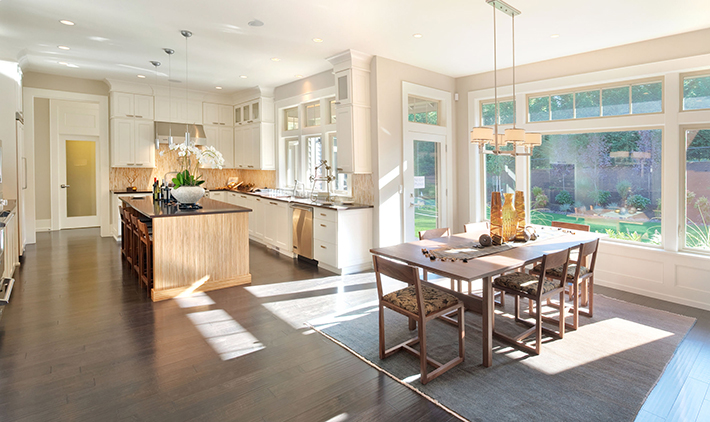
Anyone who has had hardwood floors for a long enough period knows that the sun can leave marks on them. You may pull away a rug that has been sitting there for some time to find a noticeable line between where the rug protected the wood and where the sun hit the wood full on.
But what exactly happens when sunlight hits hardwood floors?
Is there any difference between the effects on different species of woods, stains, or sealants?
Hardwood floors are susceptible to damage from a lot of places, and sunlight may be a surprising one for first-time hardwood floor owners. It’s an ambient and quiet deteriorator on your hardwood floors. Below is some information on how to best handle the damaging effects of UV light.
What actually causes the color change?
What you’ll notice when you allow your hardwood floor to linger with the full force of the sun on it through a window is either a bleaching affect or a darkening affect. This is because natural wood is a photosensitive material and reacts to overexposure to ultraviolet light like the kind that comes from the sun. It’s not all that different from our skin when left unprotected in directly sunlight, though wood can take a fair bit more punishment from the sun.
What can I do to protect my hardwood floor from the sun?
Just like human skin needs sunscreen, hardwood floors also get some protective treatments to keep them safe from overexposure to the sun’s harmful UV rays. While sealants can protect the hardwood floor for a time, they too are suspectable to the UV light and will eventually breakdown and fade, so make sure you’re keeping up with sealant and stain maintenance on your hardwood floors.
You can rearrange your furniture and rugs to give different portions of the floor protection to avoid one spot becoming discolored over time. There are window films and treatments you can apply to help minimize the effects of the sunlight in your home, this is an especially good option for those living in sunny and hot areas. Indoor drapes are always an option as well as outdoor awnings, as well.
What do I do if my floor is already discolored?
The first option for an already discolored floor is to attempt to blend the two colors. This is easier for wood discoloration that is not too drastic yet. But if it is too far gone, then you’ll need to have a professional restore the hardwood through sanding and refinishing it. It also might be a good time to replace your hardwood floor altogether with a new one if you’ve had the same hardwood for some time.
Additional Questions
Is there wood species that does better in sunlight?
Paler woods tend to do better in rooms with direct sunlight since it will minimize the contrast of sun bleaching. These woods are red and white oak, maple, birch, and ash woods.
What sort of finishes will best protect my hardwood floors from the effects of UV light?
You’ll want sun-resistant finishes to essentially act as sunblock for your hardwood floor. The options here are varnish, shellac, wax or oil finish, polyurethane, or lacquer. You’ll still want to keep an eye on them and replace them as needed.
Talk to a hardwood flooring specialist today about how to best protect your floors from the effects of direct UV light so that you can enjoy them for the long term.
Hardwood Flooring Services for a Lifetime of Flooring
There is no reason why you can’t keep the wood floors you love for decades and even a lifetime. With proper care and maintenance your hardwood floors will continue to beam with beauty and sophistication as well as their cozy look and feel.
Whether you are looking to install wood floors, restore your wood floors or have them beautifully refinished to update your interior design, Cameron the Sandman can help. Our Michigan family-owned wood flooring business has been providing hardwood flooring services for more than 80 years, making us a premier contractor throughout the Detroit metro area and beyond. Contact us with any questions!